KZ Porschdorf Sub‑Camp
KZ Porschdorf Sub‑Camp
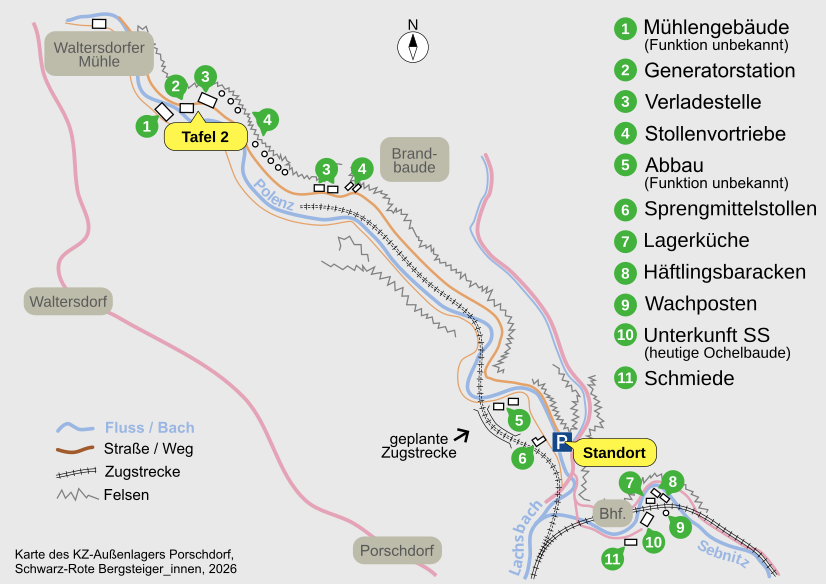
In the Polenz Valley, from early February until mid‑April 1945, there was a sub‑camp of the concentration camp Flossenbürg. It operated under the code name “Schwalbe III” and belonged to a project intended to secure the production of aviation gasoline for the German air force. The camp complex and construction sites stretched from the Ochelbaude to the Waltersdorfer Mill. The two and a half months during which the camp existed, and subsequent death march, claimed many of the 250 prisoners’ lives.
Additional information about the KZ Porschdorf sub‑camp can be found on the plaque near the parking lot.
Giuliano Benassi
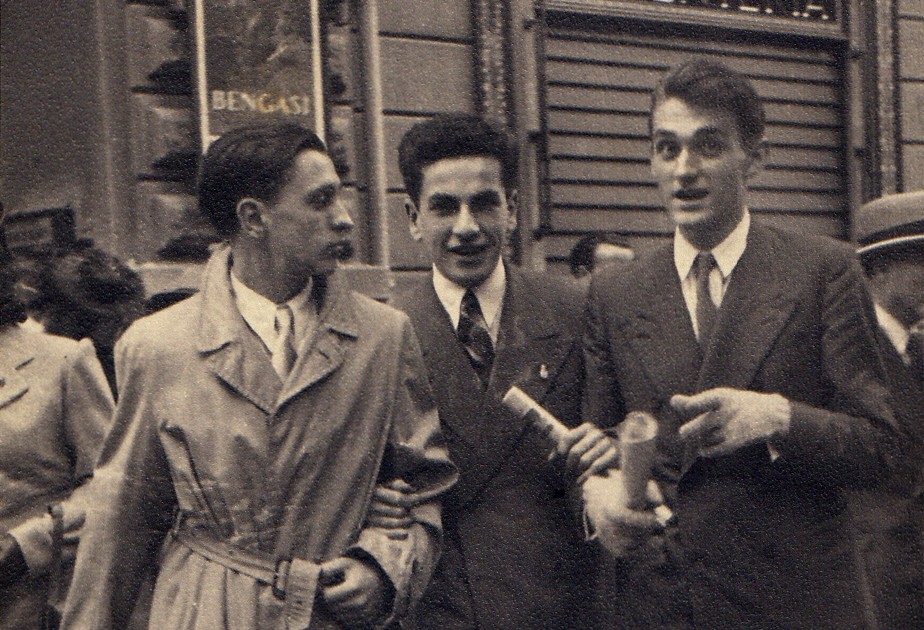
Giuliano Benassi was born the youngest of seven children on 23 March 1924 in Carpi, near Modena. His father Thomas was a lawyer and a member of parliament; after his father’s death the family moved to Bologna. A few years later his mother Tina also passed away. In the autumn of 1943 Giuliano decided to join the resistance against fascism. When he was supposed to be conscripted into the army in March 1944, he instead chose to become a partisan.
He took part as a commander in several engagements, but was later surprised by the fascist police and briefly arrested. After taking part in further illegal activities he was arrested again. This time the fascists transferred him to Verona, from where he was deported on 20 December 1944 to the concentration camp in Bolzano.
From there Giuliano wrote a final, still hopeful letter to his brother Alfredo. A month later he was sent to the Bavarian concentration camp Flossenbürg and then to the Porschdorf sub‑camp. There the prisoners were housed in damp barracks and worked daily in the stone quarry. Food was scarce; physical deterioration became increasingly evident, and Giuliano prayed a great deal. He remained steadfast in his belief in divine providence.
In mid‑April the camp was dissolved and the prisoners began their death march. The march led them for a few days to the Erzgebirge village of Oelsen. Escape was the overriding thought, as the front line was already approaching. Even in Oelsen the captives were forced to work. During one of these work details Giuliano Benassi managed to flee together with three acquaintances. One of them described the final moments:
“Giuliano was the last, about twenty metres behind me and moving very slowly.
I turned around and saw him clinging almost motionlessly to a rock.
He looked at me with wide‑open eyes. He had no strength left.
At that moment a sergeant of the guard came, drew his pistol and pulled the trigger.
That’s how Giuliano died, without shouting, without pleading.”
It was 27 April 1945; Giuliano was only 23 years old. Italy had already been liberated at that point. His story stands for many other people who fell victim to fascism and whose stories never became known.